GFRP Rebars: The Future of Construction Reinforcement
In today's fast-evolving construction industry, the need for durable, high-performance, and corrosion-resistant materials is greater than ever. Traditional steel reinforcements, though widely used, come with limitations — especially in harsh environmental conditions. This is where GFRP rebars (Glass Fiber Reinforced Polymer rebars) are stepping in as a game-changer.
At Dakshin Ultrabar, we specialize in the development and manufacturing of GFRP rebars, serving the core needs of the construction sector. From residential buildings to large-scale infrastructure, our GFRP solutions are shaping the future of modern, sustainable construction across Tamil Nadu, Karnataka, Kerala, and Andhra Pradesh.
What Are GFRP Rebars?
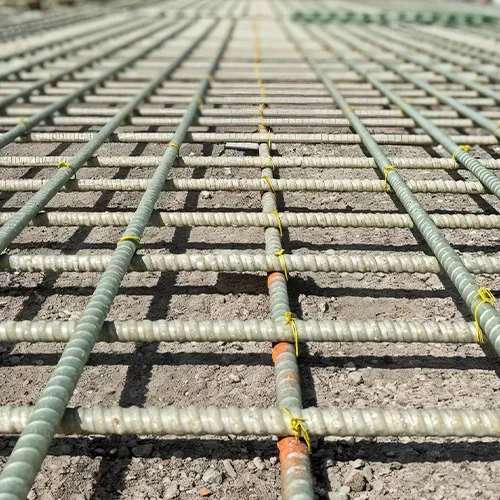
GFRP rebars are non-metallic reinforcement bars made from high-strength glass fibers embedded in a polymer resin. These bars are engineered to deliver superior performance where steel fails — particularly in corrosive, moisture-prone, or magnetically sensitive environments.
Unlike steel, GFRP does not rust, is lightweight, and offers high tensile strength. These properties make it ideal for concrete reinforcement in construction projects that demand long-lasting results.
Why GFRP is Transforming the Construction Industry
1. Corrosion-Free Performance
One of the most significant challenges in construction is steel corrosion, especially in coastal regions, water tanks, bridges, and basements exposed to moisture. GFRP rebars are 100% corrosion-resistant, eliminating the need for expensive anti-corrosion coatings or regular maintenance.
2. Superior Strength-to-Weight Ratio
GFRP rebars are four times lighter than steel and often offer higher tensile strength, making them easier to handle and transport on construction sites without compromising structural integrity.
3. Faster, Easier Installation
Due to their lightweight nature, GFRP rebars are easier to cut, bend, and place, reducing labor costs and speeding up the construction process. This is especially valuable in large-scale projects with tight timelines.
4. Non-Conductive and Non-Magnetic
In certain buildings like hospitals, airports, substations, or data centers, electromagnetic interference from steel can affect sensitive equipment. GFRP rebars are non-conductive, making them the ideal choice for electrically or magnetically sensitive environments.
5. Longer Service Life
A structure reinforced with GFRP requires no repair due to rust, resulting in lower lifecycle costs and increased durability. Builders and contractors benefit from enhanced reliability and reduced maintenance costs.
Where Are GFRP Rebars Used in Construction?
At Dakshin Ultrabar, we produce GFRP rebars and custom bend elements specifically tailored for diverse construction applications:
1. Residential & Commercial Buildings
For projects in humid or coastal areas, GFRP rebars ensure the integrity of columns, beams, slabs, and foundations without the risk of rust. They are also used in waterproof basements and balconies.
2. Infrastructure Projects
GFRP is increasingly used in the construction of bridges, flyovers, highways, and railway infrastructure, where durability and resistance to environmental stressors are crucial.
3. Marine & Coastal Structures
Jetties, ports, seawalls, and docks built using steel reinforcement often face rapid corrosion. GFRP provides a durable, maintenance-free alternative for these applications.
4. Water Tanks and Drainage Systems
In underground tanks and sewage systems, constant exposure to water and chemicals demands a material that won't degrade — making GFRP the perfect fit.
5. Precast Elements
From precast slabs and beams to readymade structural components, GFRP offers strength and longevity with greater ease of transportation due to its low weight.
Why Choose Dakshin Ultrabar for GFRP Rebars in Construction?
At Dakshin Ultrabar, we are dedicated to engineering excellence and innovation. Our advanced facility near Coimbatore is equipped with high-end manufacturing systems and a state-of-the-art testing laboratory, allowing us to ensure consistent quality, strength, and customization.
Key Advantages:
- Custom GFRP bend elements for unique construction designs
- Fast and reliable delivery across South India
- Technical support for architects, builders, and engineers
- Eco-friendly production aligned with sustainability goals
- Compliance with national and international standards
We serve clients across Tamil Nadu, Karnataka, Kerala, and Andhra Pradesh, offering end-to-end support from design consultation to on-site supply.
Addressing Common Questions in Construction
- Is GFRP rebar approved by civil authorities?
Yes. GFRP rebars are accepted by various construction standards bodies including BIS (India), ACI (USA), and CSA (Canada). - Can GFRP be used in high-rise buildings?
Absolutely. With proper structural design, GFRP performs well in mid-rise and high-rise applications, especially in water-prone or corrosive areas. - Is bonding with concrete a problem?
No. Modern GFRP rebars, including those from Dakshin Ultrabar, have ribbed and sand-coated surfaces to ensure strong adhesion to concrete.
Conclusion:
The construction world is moving toward more sustainable, durable, and efficient building materials. GFRP rebars are no longer a futuristic concept — they are the present and future of reinforcement.
At Dakshin Ultrabar, we are proud to offer high-quality, tailor-made GFRP rebars that empower builders, engineers, and infrastructure developers to construct smarter, longer-lasting, and maintenance-free structures. Whether you're designing a home, a bridge, or an industrial foundation, trust Dakshin Ultrabar’s expertise to reinforce your future with strength that lasts.
